
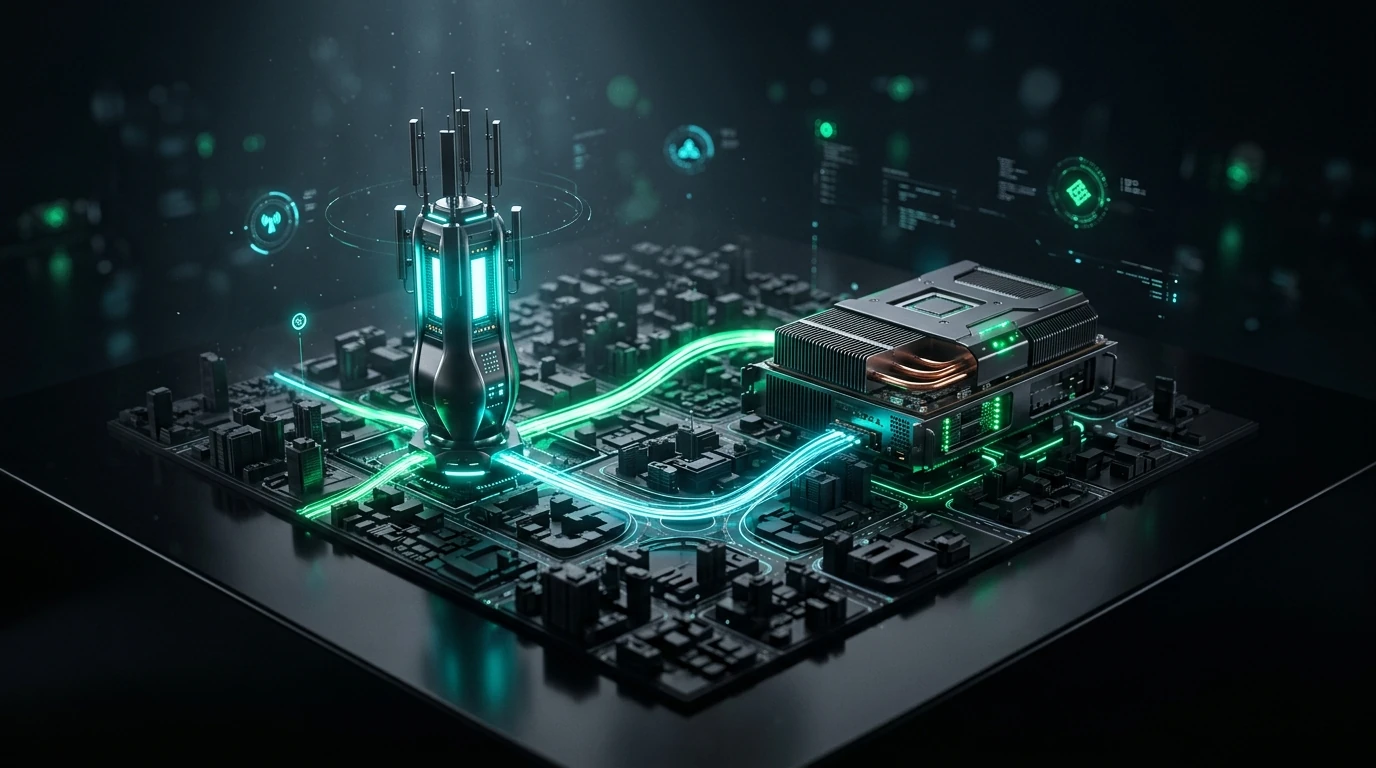
DePIN (Decentralized Physical Infrastructure Networks) uses cryptographic tokens to incentivize individuals to deploy and maintain physical hardware in the real world.
Instead of a single corporation spending billions of dollars building wireless towers, data centers, or mapping fleets, DePIN protocols crowdsource physical hardware deployment. Individuals buy and host devices (such as 5G hot spots, AI GPUs, dashcams, or weather sensors) and earn network tokens. Real-world users pay for the service, creating a self-sustaining circular economy that undercuts legacy telecoms and cloud providers by 60% to 80%.
The Trillion-Dollar Infrastructure Monopoly
Building physical infrastructure is among the most expensive business models in the world. Telecom giants spend tens of billions every year leasing tower real estate, while cloud conglomerates spend billions building massive data centers.
Because of these massive upfront costs, modern infrastructure has become heavily centralized. A small handful of corporations control global cloud computing, mobile communications, and digital maps, charging high margins to consumers and businesses.
DePIN (Decentralized Physical Infrastructure Networks) solves this by crowdsourcing real hardware. Instead of one company buying 100,000 wireless antennas, 100,000 individuals buy one antenna each, host it at their homes, and coordinate the entire network using blockchain tokens.
DePIN replaces centralized corporate infrastructure with community-hosted hardware coordinated and rewarded by transparent blockchain protocols.
The DePIN Flywheel: How Token Economics Bootstraps Real Networks
How can a new crypto project build a nationwide 5G mobile network without having billions of dollars in the bank? The answer is the DePIN Flywheel.
Step 1: The protocol creates a native token and rewards early hardware hosts for plugging in devices and creating coverage.
Step 2: As thousands of hosts join, the network achieves real physical density across cities and regions.
Step 3: Because the network has no corporate office overhead or executive bonuses, it offers mobile data or AI compute to customers at a 70% discount.
Step 4: Paying customers buy data credits using real money, which automatically buys and burns the network token, rewarding high-uptime hardware hosts.
Physical vs. Digital Resource Networks
DePIN projects fall into two distinct categories based on whether physical location matters:
- Physical Resource Networks (Location Matters): These require devices in specific geographical spots. For example, a Helium 5G hotspot must be in a populated neighborhood, and a Hivemapper dashcam must be driven on real city streets.
- Digital Resource Networks (Location Does Not Matter): These provide digital computing power that can exist anywhere with good internet. For example, an NVIDIA GPU mining node on Render Network can process AI workloads from a basement in Sweden or a warehouse in Texas.
Proof of Physical Work (PoPW) and Anti-Spoofing
Because DePIN networks pay real money to hardware hosts, malicious users will try to cheat by faking GPS locations or creating fake simulated devices.
To prevent fraud, DePIN devices contain special cryptographic security chips (Secure Elements). The chip signs data directly as it leaves the sensor, proving that a real camera took the photo or a real radio broadcasted the signal.
Neighboring nodes also check each other. If one node claims to be broadcasting in downtown Chicago but none of the other Chicago nodes can hear its radio signal, the network automatically flags and disqualifies the fake device.
The Four Core DePIN Pillars
How decentralized networks coordinate real-world capital goods and physical logistics at global scale.
Permissionless Hardware Deployment
Anyone can purchase plug-and-play nodes, deploy them in their home or vehicle, and immediately contribute physical bandwidth, compute, or telemetry.
Token-Subsidized Capital Expenditure (CapEx)
Cryptographic token issuance bootstraps supply during early adoption, removing the need for venture debt or centralized balance sheet risk.
Cryptographic Proof of Physical Work
Zero-knowledge proofs, GPS telemetry, and hardware-secured enclaves verify that nodes are providing real physical services before rewards are minted.
Radical Cost Deflation for Consumers
By eliminating corporate administrative overhead and centralized server farms, DePIN services deliver GPU compute and telecom coverage at 70% discounts.
Match the Terms
Connect each decentralized infrastructure protocol with its real-world physical utility.
Key Concepts
The structural building blocks that allow DePIN protocols to scale from zero to global physical coverage.
The DePIN Flywheel
Token emissions reward early hardware hosts. As physical coverage grows, real consumers buy services using tokens, driving network revenue and burning token supply.
Myth or Fact?
Test your instincts on DePIN myths versus operational realities.