
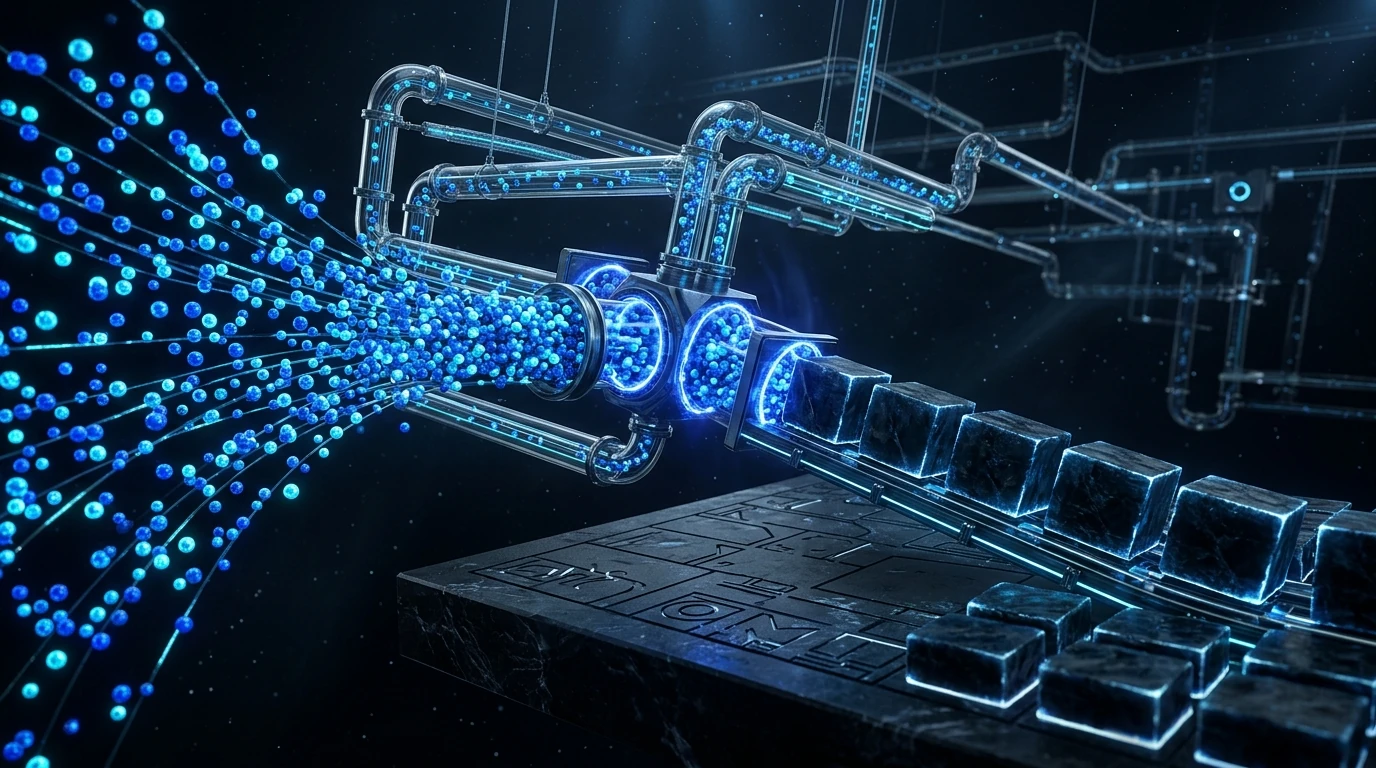
A Layer 2 rollup is a scaling protocol that bundles hundreds of transactions together off-chain, compresses them, and posts the transaction data and proof to Ethereum Layer 1.
By moving heavy computational execution off the main blockchain while relying on Ethereum Layer 1 for settlement and data availability, rollups slash transaction fees by 95% to 99% while preserving the exact same decentralized security guarantees. The two dominant designs are Optimistic Rollups (Arbitrum, Optimism, Base) and Zero-Knowledge Rollups (zkSync, Starknet, Linea).
The Blockchain Trilemma and the Need for L2s
Blockchains face a famous engineering constraint known as the Blockchain Trilemma: you can only optimize for two out of three qualities at once: Decentralization, Security, and Scalability.
Ethereum chose maximum Decentralization and Security. Because every single computer across the globe must verify every transaction, the base network can only process about 15 to 30 transactions per second (TPS).
When millions of users trade at the same time, gas fees surge to $50+ per trade. Layer 2 rollups solve this by moving the computational workload off-chain while keeping Ethereum as the ultimate judge and court of law.
Optimistic vs ZK Rollups: The Great Divide
In the Layer 2 ecosystem, two architectural philosophies compete for supremacy: Optimistic Rollups and Zero-Knowledge (ZK) Rollups.
| Characteristic | Optimistic Rollups | ZK-Rollups (Validity) |
|---|---|---|
| Core Philosophy | Assume valid until proven fraudulent | Mathematically prove valid upfront |
| Verification Speed | Fast execution, 7-day challenge window | Fast execution, instant L1 settlement |
| L1 Gas Overhead | Lower computational overhead on L1 | Requires ZK verifier gas on L1 |
| EVM Equivalence | 100% full EVM equivalence (OP Stack) | Bytecode/Type-1 to Type-4 EVM compatibility |
| Top Live Networks | Arbitrum One, Optimism, Base | zkSync Era, Starknet, Scroll, Linea |
| Standard Withdrawal | 7-day delay (or fast third-party liquidity bridges) | Minutes to hours (as soon as proof is verified) |
Optimistic rollups lead today in Total Value Locked (TVL) due to developer tooling ease, while ZK-Rollups offer superior long-term cryptographic settlement speeds.
The Role of the Sequencer and Decentralization
When you swap tokens on Arbitrum or Base, you send your transaction to an off-chain node called the Sequencer.
The Sequencer orders transactions, executes them in milliseconds, and gives you instant soft confirmation. Periodically (every few minutes), the sequencer compresses thousands of transactions and submits the batch to Ethereum Layer 1.
Today, most Layer 2 networks run a single centralized sequencer operated by the project's foundation. While this delivers instant sub-second transactions, the roadmap for all major L2s includes decentralized shared sequencer sets to eliminate single points of failure.
How EIP-4844 Blobs Slashed L2 Fees by 95%
Historically, Layer 2 rollups had to post transaction data to Ethereum as permanent calldata. This meant L2 users were competing directly with L1 users for expensive block space.
The Dencun upgrade (EIP-4844) introduced Data Blobs: temporary storage parcels attached to Ethereum blocks that automatically self-delete after approximately 18 days.
Because blob data is not stored forever by archival nodes, it costs a tiny fraction of normal gas. This single upgrade permanently dropped average L2 transaction fees from $0.50 down to less than $0.01.
Comparing the Top Layer 2 Networks in 2026
Here is a breakdown of the leading Layer 2 ecosystems active today:
- Arbitrum One: The DeFi powerhouse with the highest TVL, deepest liquidity pools, and Nitro technology stack.
- Base: Incubated by Coinbase, built on the open-source OP Stack. The go-to hub for consumer social dApps and retail onboarding.
- Optimism (OP Mainnet): Pioneer of the Superchain vision, standardizing interoperable L2 rollups across the ecosystem.
- zkSync Era & Scroll: Leading ZK-Rollups bringing native Zero-Knowledge cryptographic verification to EVM smart contracts.
- Starknet: High-performance STARK-powered network utilizing the Cairo language for massive scaling.
How to Bridge Funds to Layer 2 Safely
To start using Layer 2 networks, you must bridge assets from Ethereum L1 or centralized exchanges:
- Direct Centralized Exchange Withdrawal: The cheapest method. Major exchanges like Bybit and Binance allow you to withdraw ETH and USDC directly to Arbitrum, Base, or Optimism, bypassing L1 gas fees entirely.
- Official Native Bridges: Use the canonical bridge for maximum security when moving large sums (note: native Optimistic withdrawals take 7 days to return to L1).
- Fast Third-Party Liquidity Bridges: Protocols like Across or Hop use market maker liquidity pools to bridge funds between L2s in seconds.
- Safeguard Your Keys: Use hardware wallets like Ledger to sign L2 transactions securely.
Investor Checklist: Evaluating L2 Risks
Before deploying significant capital onto any Layer 2 network, check its risk profile using this 8-point checklist:
- ✓ L2Beat Stage Rating: Is the rollup classified as Stage 1 or Stage 2 with decentralized fraud/validity proofs active?
- ✓ Escape Hatch Functional: Can you force-withdraw assets on Ethereum L1 without sequencer cooperation?
- ✓ Security Council Multi-Sig: Are administrative upgrades protected by a decentralized multi-sig with a transparent timelock?
- ✓ Data Availability on L1: Does the rollup post data to Ethereum blobs rather than off-chain external committees?
- ✓ Deep Liquidity & TVL: Does the network support established stablecoins and blue-chip DeFi protocols?
- ✓ EVM Compatibility: Does the network run standard Solidity smart contracts without custom compiler friction?
- ✓ Proven Uptime Track Record: Has the sequencer maintained stability during high-volatility market stress?
Layer 2 rollups are not all equally decentralized. Understanding stage maturity helps you protect your capital.
Core Layer 2 Scaling Pillars
How modular blockchain architecture separates execution from consensus and security.
Off-Chain High-Speed Execution
Transactions are executed in milliseconds on a dedicated L2 virtual machine capable of handling thousands of trades per second.
Data Compression & Blob Storage
Hundreds of transactions are compressed into temporary data blobs (EIP-4844) posted to Ethereum Layer 1 at minimal cost.
Inherited Layer 1 Security
Rollups do not require separate validator sets. If an L2 network halts, users can trustlessly force-withdraw assets directly on Ethereum L1.
EVM Equivalence
Developers deploy identical Solidity smart contracts and users interact with existing wallets like MetaMask with zero code modifications.
Match the Terms
Connect each Layer 2 concept with its correct definition.
Key Concepts
Explore the six architectural building blocks powering Ethereum Layer 2 rollups.
The Sequencer
An off-chain node responsible for receiving user transactions, ordering them, executing them instantly, and batching them for submission to Ethereum Layer 1.
Myth or Fact?
Test your instincts on Layer 2 rollup myths versus realities.
Layer 2 rollups are the proven scaling path for Ethereum, bringing sub-cent transactions without sacrificing security.
By separating transaction execution from Layer 1 data availability and consensus settlement, rollups enable global Web3 adoption. Choose your network based on liquidity depth, ecosystem maturity, and L2Beat decentralization stages.